




High‑Top vs. Low‑Top Cheer Shoes: Which Are Best?
For the majority of athletes, a low-top cheer shoe is the ideal option because it delivers a lightweight feel, enhances your athletic ability, and lets your joints move freely while jumping and tumbling. On the other hand, a high-top or mid-top shoe can be a better choice if you need a stronger grip on your foot and a solid base, or if you are recovering from a sprain and want extra support around your foot.
High-top and low-top cheer shoes feel different on your feet and the better choice depends on what you want from your shoe. A low-top cheer shoe gives you more movement flexbilty around the ankle and a lightweight, less restrictive feel. A high-top or mid-top shoe gives you more coverage around the ankle and can feel more secure if that is what you prefer.
In this article
So, which is best? For most athletes, I would choose based on fit and movement rather than assuming one style is better. If you want maximum freedom around the ankle, go low-top. If you prefer more strong grip pn your feet and a more enclosed feel, a mid-top can be the better choice.
Here’s how the two styles compare, where each one works best and what to consider before choosing your next pair of cheer shoes.
What High‑Top and Low‑Top Mean in Cheer
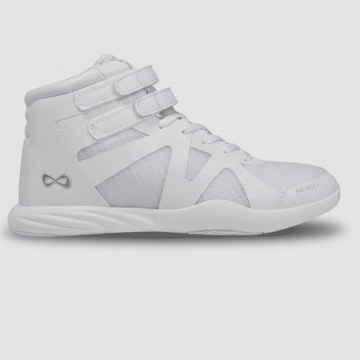
● High-top (or mid‑top) cheer shoes have a collar that extends over or above the ankle. They offer extra ankle support and structure.
● Low-top cheer shoes stop below the ankle bone, giving more freedom of movement at the joint.
Pros and Cons: What Each Style Does for You
Let’s look at how high-tops vs low-tops affect performance, support, and risk — based on what movement the sport demands and what your body needs.
High‑Top / Mid‑Top Shoes
Pros:
● Extra ankle support from the collar feels more stable, especially for athletes who worry about rolling or twisting.
● The “wrap” around the ankle can give athletes more confidence, especially during landings or transitions.
● If you’re a base, that extra structure will feel reassuring.
Trade-Offs:
● The added material can restrict ankle mobility. That restriction may reduce how well your ankle and foot muscles activate.
● Heavier shoes: adding structure tends to add weight, which can slow reaction, reduce agility, or make high-repetition skills feel more tiring.

Low‑Top Shoes
Pros:
● Freedom of motion. Letting the ankle move more naturally helps with transitions, push-offs, and adjustments mid-skill.
● Because low-tops use less material, they’re often lighter, which can help with speed, jumps, and less fatigue.
● Your ankle and foot stabilizers must work harder. Over time, this can make your ankles stronger. Just remember to include strength and balance exercises for support.
Trade-Offs:
● Less passive support: if your ankles need extra support, or you’ve had sprains, low-tops demand more of your body to stabilize.
● Can feel less “locked in” especially for athletes who prefer a more “locked” sensation.
● In some cases, if the fit isn’t snug, heel slip or lateral motion can happen more easily.

How Nfinity Shoes Fit Into This
Because you asked, here’s how Nfinity’s line fits into the high‑top / low‑top discussion, with the indoor vs sideline distinction in mind:
● High‑top / mid‑top performance shoes: A model like the Beast Mid-Top gives that ankle wrap for gym work. These are meant for indoor, mat‑based practice and competition. Not for regular outdoor use.
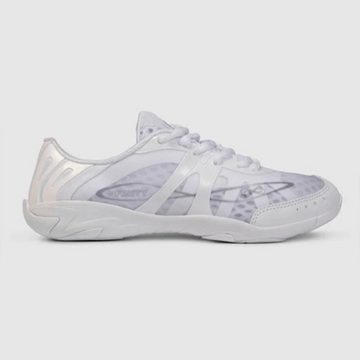
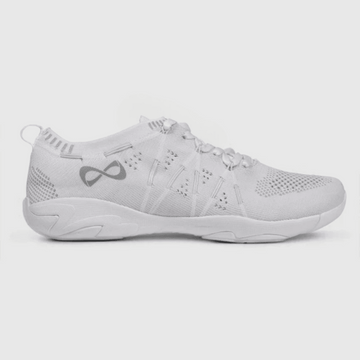
● Low‑top performance shoes: Models like Vengeance, Flyte, Alpha (among others) are designed for gym / competition use. These allow more ankle motion and are very lightweight. Be sure to use them only on mats or indoor floors to protect the outsole.
● Sideline shoes: Evolution, Fearless, Rival 2 are built to handle a variety of surfaces (gym, halls, some outdoor) and can be a safer, more durable choice when you’re not strictly on mat work.
If you like high-tops but need to walk indoors and outdoors, consider a mid-top performance shoe for practice. You can pair it with a sideline shoe for other activities.

Final Thoughts
If you’re trying to pick between high-top and low-top cheer shoes, here’s a simple summary to help:
● Choose low-top performance shoes for better mobility and lightness. They keep your ankle joints active and responsive.
● Choose mid or high-top shoes for more support and structure, especially if your role needs it. Pair them with good training for the best results.
● Always match your shoe choice to where you’ll use it: performance shoes indoors, sideline shoes for mixed or outdoor use.
● A good-fitting shoe that makes you feel confident, along with proper care, will always outshine a trendy shoe that doesn’t fit.
Frequently Asked Questions
What are high-top cheer shoes?
High-top cheer shoes extend higher around the ankle than low-top designs, giving you more ankle coverage. Nfinity Beast Mid-Top is one of the best high-top cheer shoes ever.
What are low-top cheer shoes?
Low-top cheer shoes sit below the ankle and give you more freedom around the ankle when you move. Nfinity Flyte, Alpha and Vengeance are examples of lower-cut cheer shoes.
What is the difference between high-top and low-top cheer shoes?
The main difference is ankle coverage. Low-top shoes leave more of the ankle exposed, while high-top and mid-top shoes cover more of the ankle. The better choice depends on how you want your shoes to feel when you jump, tumble and stunt.
Which one is better, high-top or low-top?
Neither style is automatically better. Low-tops are a good choice if you prefer a lightweight, less restrictive feel, while a mid-top or high-top can suit athletes who prefer more ankle coverage.
Can you jump in high-top cheer shoes?
Yes. High-top and mid-top cheer shoes can be used for jumps. Choose one that feels secure and allows you to move naturally through your jumps.
Are high-top cheer shoes heavier than low-top shoes?
They can be, depending on the shoe's materials and construction. If weight is important to you, compare the actual shoe rather than assuming every high-top will be heavier.
Are low-top cheer shoes more flexible?
A low-top design generally gives you more freedom around the ankle, but overall flexibility also depends on the sole and construction of the shoe.
Do high-top cheer shoes restrict movement?
Not necessarily. A well-fitting high-top or mid-top should allow you to move naturally. However, if you prefer more freedom around your ankle, a low-top may feel better.
Should I choose high-top or low-top cheer shoes for competition?
Choose the style that gives you the fit, movement and comfort you need for your routine. Competition does not automatically require a high-top or low-top design.


